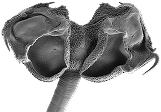
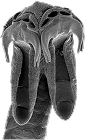
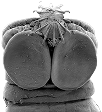
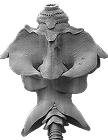
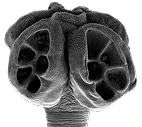
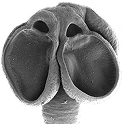
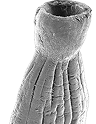
Tapeworms (or cestodes) are a Class of platyhelminths that as adults are obligate parasites in the gut of vertebrates. They themselves lack a digestive system and are unique in their possession of elaborations called microtriches throughout their outer surface; among other functions, these structures appear to aid in absorption of nutrients. The life cycles of tapeworms are complex often involving a series of 3 or more hosts; they transfer between these hosts when one host consumes another. The ~6,000 tapeworm species comprise 18 Orders that differ most conspicuously in the form of their attachment structure, the scolex.


Disclaimer: The Global Cestode Database is a work in progress. Many of the cestode records remain unverified (i.e., they have not yet been examined by a taxonomic expert); many taxa remain to be entered. We urge caution in the use of the GCD as an exhaustive source of information on cestode taxa.
Database Citation Guidelines: Caira, J. N., K. Jensen, E. Barbeau (Eds.). 2026. Global Cestode Database (GCD). World Wide Web electronic publication. www.tapewormdb.uconn.edu. Accessed [month] [day], 2026.
If citing the Elasmobranch module, use above citation modified as follows: Global Cestode Database (GCD): Elasmobranch module. World Wide Web electronic publication. www.elasmobranchs.tapewormdb.uconn.edu.